%201.webp)


Whether you’re tired of your current living room layout or have some new pieces of furniture to introduce into the mix, you often know when it’s time to change things up. But getting started can feel so much harder than you originally thought.
How am I supposed to rearrange my furniture in a way that works for my living room?
Knowing how to arrange living room furniture well is one of the most common design challenges homeowners face — and it's easier to mess up than you might think. The good news is that once you understand a few key principles, creating a functional living room design that looks great and feels comfortable becomes much simpler.
At Living Designs Furniture, our Houston-based furniture stylists help homeowners design living spaces every day. With more than 45 years of craftsmanship experience through our family-owned manufacturing company, our team understands how layout, scale, and comfort all work together to create a space that feels both beautiful and functional.
Our furniture styling experts at Living Designs Furniture are here to break down the most important do's and don'ts for arranging your living room furniture.
1. Sofa placement
Your sofa, couch, or sectional is typically the largest piece in your living room. As the usual focal point, getting this placement right sets the foundation and the vibe for the rest of the room. We typically advise choosing the sofa placement first, then working everything else around it.
Do: Float your sofa away from the walls
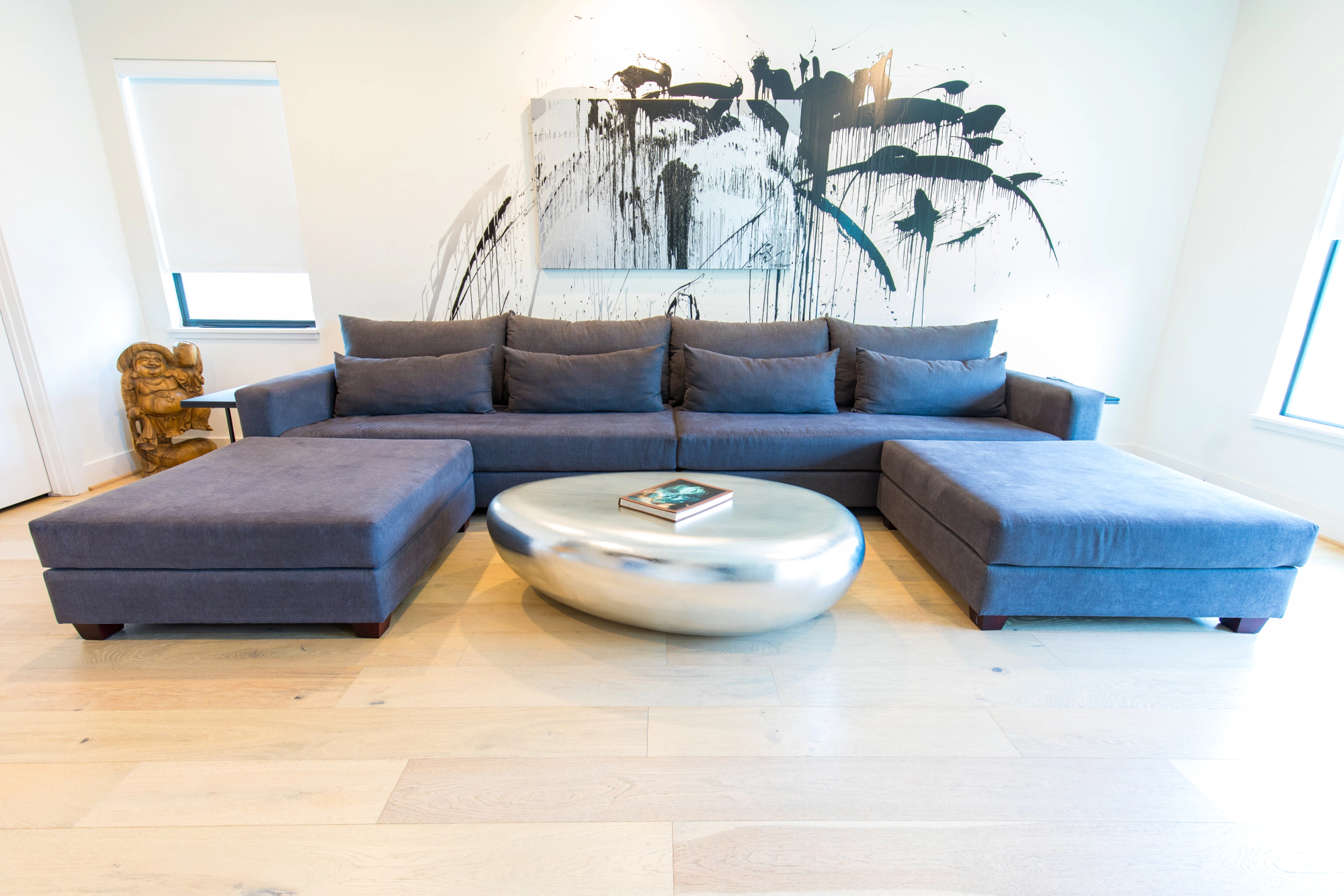
This might feel counterintuitive, but pulling your sofa away from the wall — also known as “floating” in the industry — creates a more intimate, intentional space. Floating your furniture, even just 12–18 inches, makes the room feel larger while allowing for better traffic flow behind seating areas. If you have a modular sectional, floating it can help define separate zones in an open-concept space, creating structure within a larger room. Modular pieces are especially helpful because they allow you to reconfigure your layout over time as your needs change.
Don't: Push everything against the walls
What is the biggest mistake in placement of furniture? It's pushing every piece against the walls in an attempt to maximize space. This actually makes rooms feel smaller and less inviting. Furniture crammed against walls creates awkward gaps in the center of the room and makes conversation difficult. Instead, bring pieces toward the center to create a cozier space where people can converse freely without feeling like they’re miles apart.
2. Traffic flow and pathways
How people move through your space matters just as much as where your furniture sits. If you want the flow of your room to feel natural and accessible to guests, be mindful of where you place each piece of furniture.
Do: Create clear pathways
How should living room furniture be arranged? Always with accessibility in mind. Establish clear walking paths that allow people to move through the room without squeezing between furniture or doing the awkward sideways shuffle.
Aim for pathways that are at least 30–36 inches wide — this is comfortable for one person and allows two people to pass each other if needed without bumping into one another. Consider the natural flow from doorways to other rooms, and make sure your furniture arrangement supports that movement rather than fighting against it.
Don't: Block natural walking paths
Avoid placing furniture directly in the line of traffic between doorways or in front of key features like windows. If you find yourself constantly walking around the coffee table to reach the kitchen, or if guests have to navigate an obstacle course to sit down, your layout needs adjusting. Even beautiful furniture becomes a nuisance when it's constantly in the way.
3. Furniture scale and spacing
Getting the size and spacing right can make or break your room's functionality. Avoid the way-too-common and oh-so-costly mistake of bringing home furniture that isn’t the right size by letting Living Designs Furniture create pieces meant for your space’s configuration.
Do: Leave appropriate space between pieces
Proper spacing makes your living room feel balanced and usable. Here are just a few broad tips to help you visualize how far apart your furniture should be:
- 18 inches between the sofa and the coffee table is enough to set down drinks comfortably, but not so far that you're stretching.
- 3–5 feet between seating pieces is ideal for easy conversation without feeling cramped.
- 24–30 inches around dining tables or accent tables is great for comfortable movement.
Before you think, “I’m going to rearrange my furniture,” take time to measure your furniture and your room’s dimensions carefully. This prevents the frustration of moving heavy pieces multiple times. Learn more about how to measure furniture in our extensive guide — believe us, it’s one you won’t want to skip.
Don't: Use furniture that's too large or too small for your space
This happens to be one of the main mistakes homeowners make when learning how to arrange living room furniture: they buy the wrong size.
A large, multi-piece sectional in a small room will dominate the space and make movement difficult for everyone. On the other hand, tiny furniture in a large room looks lost and creates an unbalanced, uncomfortable feel.
When deciding where to buy living room furniture, you can bring your room measurements to Living Designs Furniture, and we will steer you toward pieces that are appropriately scaled for your living room. If you're wondering how to arrange living room furniture in a small space, opt for armless chairs, leggy furniture that doesn't block sightlines, and pieces that can serve multiple functions. It will free up space without looking barren.
4. Focal point arrangement
Every room needs a visual anchor that helps organize the space. Not only does it make arranging furniture easier for you, but it will dictate the natural flow of the room.
Do: Arrange furniture around a clear focal point
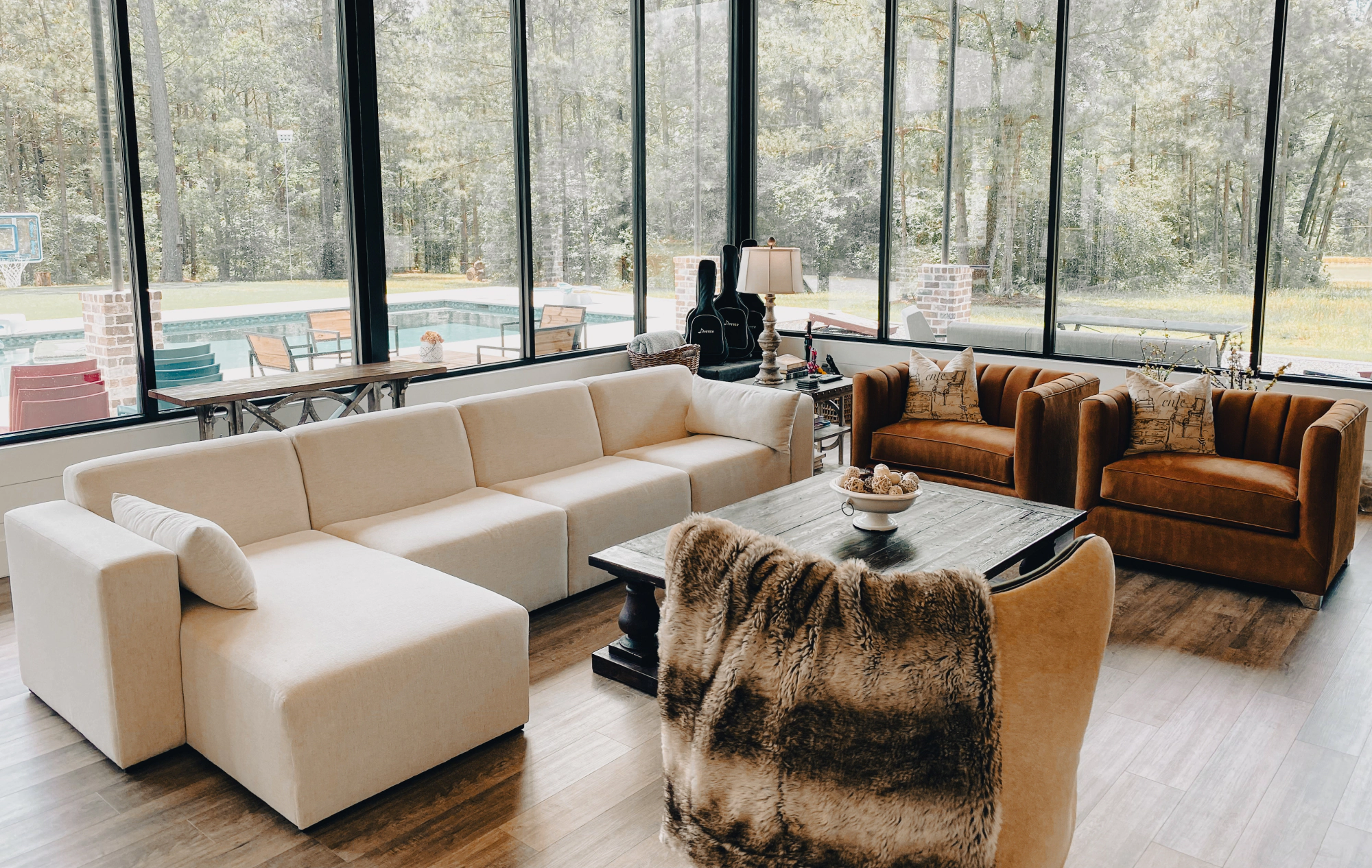
Identify your room's natural focal point — this could be a fireplace, a large window with a view, built-in shelving, or even your TV. Arrange your seating to face or angle toward this focal point, creating a sense of purpose and cohesion. If your room doesn't have a natural focal point, create one with a large piece of art, a media console, or an accent wall. Your furniture arrangement should guide the eye and make it clear where attention should go.
%202.webp)
Don't: Create competing focal points
Trying to orient furniture toward both the fireplace and the TV on opposite walls creates confusion and makes the room feel disjointed. If you have multiple potential focal points, choose one as the primary point and treat the others as secondary features. You might angle seating slightly to acknowledge both, but don't split your furniture grouping between two different areas — it fragments the space and makes conversation awkward.
5. Create conversation areas
Living rooms should facilitate interaction, not hinder it. Here are ways to arrange your sectionals, sofas, or chairs to make hosting guests more comfortable and enjoyable.
Do: Position seating comfortably
Arrange sofas and chairs in a way that allows people to see each other comfortably without turning their necks at odd angles. Ideally, seating should form a rough "U" shape or face each other across a coffee table. This creates an intimate conversation area where everyone feels included — and no one has their back to another guest.
For larger rooms, consider creating multiple seating areas: a main group with larger pieces, such as sectionals, and a secondary reading nook or game area. A furniture arrangement tool (many are available online for free) can help you visualize these zones before you start moving around your heavy furniture.
Don't: Line up seating in a row
Avoid arranging all your seating in a straight line against one wall — unless you're aiming for a waiting room vibe. Trust us, it won’t look good. This "airport terminal" layout makes conversation impossible and feels cold and unwelcoming. If you have a long sofa and want additional seating, place accent chairs perpendicular to the sofa or across from it rather than continuing the line along the wall.
6. Layering and accessories
Once your major pieces are positioned, the little details can make a huge difference in the cohesion of your living room.
Do: Layer rugs, lighting, and accessories strategically
When deciding on what items to add to your living room, consider these:
- Rugs: A well-placed area rug anchors your seating arrangement and defines the space. Make sure it's large enough that at least the front legs of all major furniture pieces sit on it.
- Lighting: Add table lamps, floor lamps, or wall sconces at different heights to create ambient lighting layers.
- Cozy touches: Accessorize with throw pillows, blankets, and side tables that add function and coziness without cluttering the space.
When mixing furniture styles, use accessories and textiles to create visual connections between different pieces. Pairing a funky rug with classical pieces can add extra touches of personality without having to purchase too many new items.
Don't: Overcrowd the room with too many pieces
More furniture doesn't equal better design. Resist the urge to fill every inch of floor space with additional seating, side tables, or decorative pieces. Negative space is valuable because it gives the eye a place to rest and makes the room feel larger and more breathable.
If you're constantly bumping into furniture or if the room feels chaotic, you probably have too much in the space. Sometimes removing a piece improves the layout dramatically.
How to move furniture (without the headache)
Ready to put these principles into action? Before you start dragging your sofa across the floor, take a strategic approach.
Map it out with painter's tape
One of the smartest things you can do before moving furniture is to map out your new layout using painter's tape on the floor. Measure your furniture pieces and use tape to outline where each item will sit. This gives you a visual preview of the arrangement without the physical strain of moving heavy pieces multiple times.
You'll quickly see if that sectional is too large for the space or if your coffee table placement blocks the walkway — all without lifting a finger.
Walk through your taped layout multiple times. Sit on the floor where your sofa would be. Stand where your accent chair will go. Does it feel right? Can you move through the space comfortably? Adjust the tape as needed until you find the perfect configuration.
Utilize furniture arrangement tools (with caution)
There are plenty of furniture arrangement tool apps and online programs that let you digitally design your space, and they can be helpful for getting a general sense of layout possibilities. However, these tools aren't always accurate — they may not account for baseboards, awkward corners, or the actual dimensions of doorways and windows. Apps also can't capture how a space feels when you're in it.
Use digital tools as a starting point for ideas, but don't rely on them completely. Always verify measurements in your actual space and remember that what looks good on screen might not translate to real life.
Get expert help (for free)
The best idea? Let a furniture stylist from Living Designs Furniture help you with a complimentary consultation. Bring pictures of your space, dimensions of your current furniture, and any room measurements you have, and our team can help you lay out a plan that actually works.
No guesswork, no trial and error, no sore back from moving your oversized sectional five different times.
We've arranged countless living rooms and know exactly how to arrange living room furniture in small spaces or how to make a large room feel cozy. Plus, if you're shopping for new pieces from us, we'll help you choose items that are appropriately scaled and positioned for your specific layout. It's personalized expertise that saves you time, frustration, and potentially costly mistakes.
How Living Designs Furniture can help you arrange your living room
Still feeling overwhelmed by how to arrange living room furniture? You don't have to figure it out alone. At Living Designs Furniture, we don't just sell you beautiful, locally-crafted, quality furniture — we help you make it work in your actual space. When you work with us, you get access to our team of furniture experts who provide complimentary design consultations.
We'll help you:
- Determine the best furniture layout for your room's size and shape
- Choose appropriately scaled pieces that fit your space
- Create a cohesive design that reflects your style
- Plan for traffic flow and functionality
- Visualize how different configurations will look and feel
Whether you're starting from scratch or trying to rearrange your living room with pieces you already own plus new additions, our experts can guide you through the process. We understand that every home is different, and we take the time to understand your lifestyle, needs, and design preferences before making recommendations.
And because we're a local Houston manufacturer, you can visit our Downtown Houston or Memorial City showroom to see furniture in person, test it out, and even bring your room measurements for personalized advice. No pressure, no gimmicks — just genuine expertise to help you create a living room you'll love.
When it comes to knowing how to arrange living room furniture properly, leave it to the experts at Living Designs Furniture.
Living Designs Furniture is part of a family-owned Houston manufacturing company with more than 45 years of experience crafting quality products locally. Many Houstonians already know our sister company, Texas Mattress Makers, which has been voted Best Mattress Store in Houston multiple years in a row. Living Designs Furniture was created to bring that same commitment to craftsmanship, customization, and customer service into the furniture world. Just like Texas Mattress Makers builds mattresses locally using premium materials, Living Designs Furniture creates high-quality, American-made furniture designed to last for years in your home.
More Helpful Articles by Living Designs Furniture:
- Buy It for Life: How to Find Furniture That Will Last
- Why Performance Fabrics are a Must-Have
- How We Make Shopping for Furniture Less Scary
- Where to Find Furniture in Memorial City, Houston, TX
- Why Texans Say We Are the Best Furniture Store in Houston